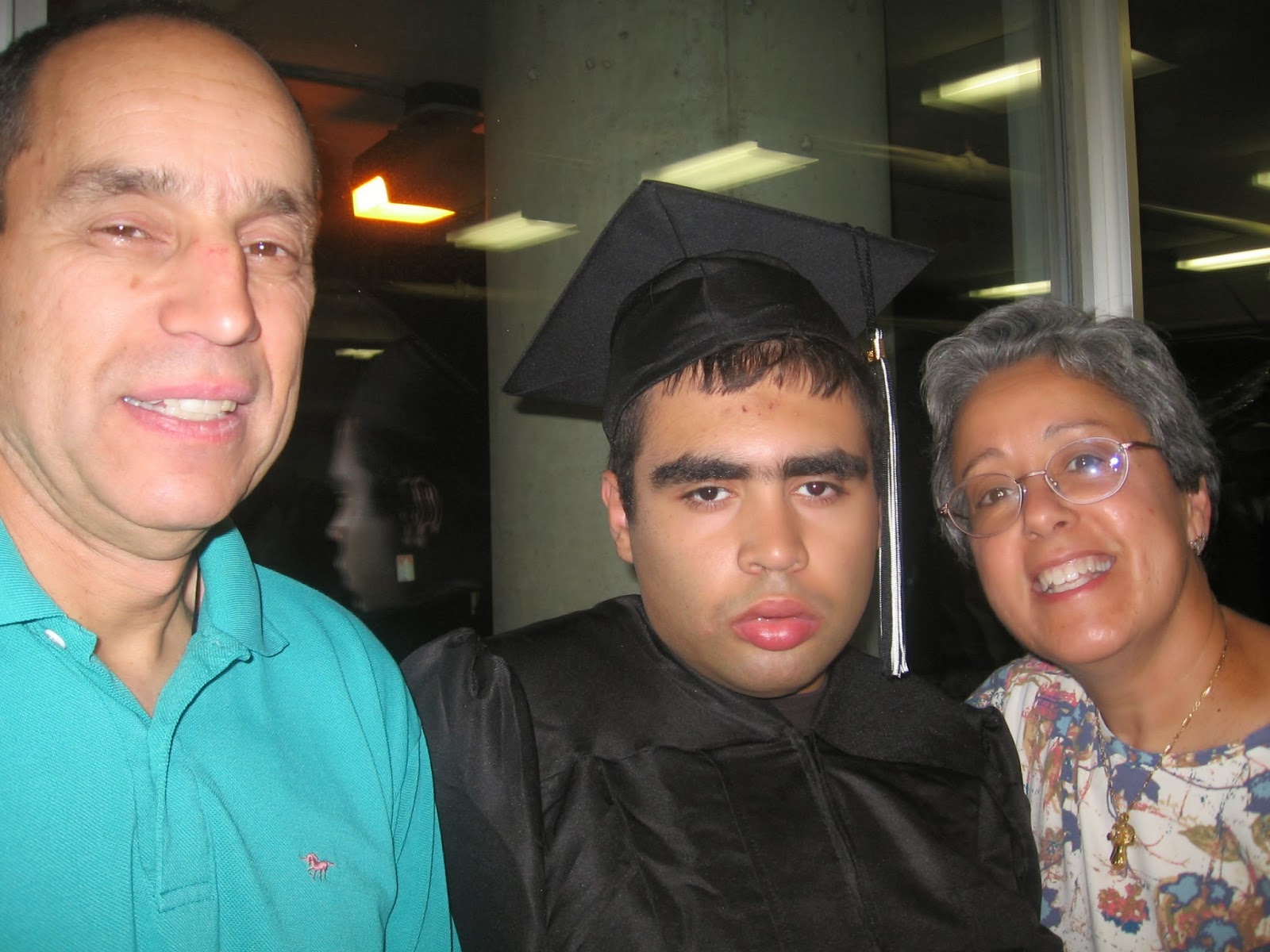
A lot of safety issues for one group of individuals can carry over into another. Sometimes taking care of a special needs child or young adult is like taking care of your elderly parents or visa versa. I read a post regarding the bathroom being safe. My in-laws just had the same contractor that took care of cutting out mom's tub, to make it easier to get in and out of, do their tub. The post was from Caring.com . It made some good points that we don't always think of so I thought I would share them.
*Be careful of water on the floor. They mention that having a shatterproof door is better than a curtain to help prevent a fall. Also use some type of tiles that feet can grip or decals that make the tub/shower floor not so slippery.
Since a lot of use a variety of soaps, shampoos, moisturizers, etc, the tub/shower floor can get slippery. So make sure someone wipes down the shower or tub with a wash cloth when the person is done. Of course, grab bars are a great addition to the bath.
Try to reduce glare. White seems to be a popular color for the bath but with all the lightening, including natural sunlight, there may be too much light making it hard for elderly or disabled people to see properly and lose their balance. Caring.com suggests using frosted lights, use a row of contrasting tiles or wallpaper borders. Of course, someone can always paint the walls a different color. Get a seat for the shower so the person can sit. This goes along with a hand shower nozzle that can be used at any level to help wash up.
During the colder months, people may be tempted to use space heaters and take one into the bathroom. Dangerous - someone may lose their balance and fall into one causing burns; or papers or towels may land on it possibly causing a fire. So of course you can call a professional to check the heating system in the bathroom; you can run the shower for a few minutes before the person gets in to steam up the bath; put the towels in the dryer so they are warm when the person gets out.
Back to the shower door again, try not to use it for balance. Install grab bars in the shower and don't place towel racks near the door either. People tend to use those for balance too and it can stress the shower door. Every so often check the shower door for cracks, chips, or glass rubbing against metal.
If a door or window does break, place a towel over the glass on the floor so it makes it safer to get out.
Sharing information & services we use for our special needs child, Will, and our elderly parents. Exploring more services & inviting others to share their stories with us.
Showing posts with label special needs. Show all posts
Monday, March 16, 2015
Friday, February 7, 2014
How to get money to get out of debt. Thanks +Kelly Schaefer
There are a lot of people out there, for a variety of reasons, having a hard time paying bills. People are having a hard time with employment, taking care of special needs children or elderly parents, there may be someone ill in the family - possibly a major income earner. This of course creates headaches, worry, sleepless nights. I saw a great post on "The Executive Suite" by + Kelly Schaefer that gives ideas on how to fundraise for personal debt from government grants, benefits, or do-it-yourself fundraising. Here is what Kelly mentions:
**Grants and public assistance: "The U.S. government provides numerous grants and public assistance programs to citizens in the most dire financial need. Low-income families and individuals who meet state regulated guidelines are often eligible to receive funding through welfare programs to ensure basic survival needs. Depending on your income, number of dependents and employment status, you might be eligible to receive food stamps, Medicaid and monthly cash allowance benefits. Contact your state department of health and human services -- or a similar agency -- for application information and eligibility guidelines. You can also explore Benefits.gov website for personal grant opportunities."
**Crowdfunding opportunities: "Crowdfunding is a way of soliciting donations from a public audience by setting a financial goal and pleading your cause. This is typically accomplished by setting up a profile on a crowdfunding website. You compose a short summary of your needs and outline a specific financial goal you need to meet to resolve your financial issue. Your case is received and verified by web administrators and -- if approved -- posted publicly with links to accept pledges and donations. The Modest Needs organization helps needy families and individuals raise funds for anything from overdue utility bills to funds to cover medical expenses. Edu Lender (edulender.com/community/) is a similar site focusing on the financial needs of struggling college students."
**fundraising events: "Hosting community social events is often a fun and effective way to raise money to help put a dent in your debt. If you belong to a church, community center or similar facility, look into renting a conference or banquet room to hold an event. Depending on the cause of your debt and personal situation, some organizations may loan you the space free of charge. Pancake breakfasts and spaghetti dinners are relatively inexpensive to organize and provide an opportunity for neighbors to come together in a social atmosphere. Estimate the costs of food and materials and expected head count to establish a fair yet profitable admission fee. Promote the event at least one month in advance via email marketing, flier distribution and posting ads in local bulletin boards."
**Rummage sales: "You can easily earn money to clear your debts -- while clearing unwanted clutter too -- by selling discarded household items. Take a look around your garage, basement, closets and storage units for seldom used belongings and assemble a sales inventory. One man's trash may be another's treasure. Gather all unwanted items and hold a yard or garage sale to make immediate on-the-spot sales. You may be able to increase your profit by listing items on eBay where buyers can bid in online auctions to "win" your items."
Lots of great ideas you might want to consider. Thank you again +Kelly.
**Grants and public assistance: "The U.S. government provides numerous grants and public assistance programs to citizens in the most dire financial need. Low-income families and individuals who meet state regulated guidelines are often eligible to receive funding through welfare programs to ensure basic survival needs. Depending on your income, number of dependents and employment status, you might be eligible to receive food stamps, Medicaid and monthly cash allowance benefits. Contact your state department of health and human services -- or a similar agency -- for application information and eligibility guidelines. You can also explore Benefits.gov website for personal grant opportunities."
**Crowdfunding opportunities: "Crowdfunding is a way of soliciting donations from a public audience by setting a financial goal and pleading your cause. This is typically accomplished by setting up a profile on a crowdfunding website. You compose a short summary of your needs and outline a specific financial goal you need to meet to resolve your financial issue. Your case is received and verified by web administrators and -- if approved -- posted publicly with links to accept pledges and donations. The Modest Needs organization helps needy families and individuals raise funds for anything from overdue utility bills to funds to cover medical expenses. Edu Lender (edulender.com/community/) is a similar site focusing on the financial needs of struggling college students."
**fundraising events: "Hosting community social events is often a fun and effective way to raise money to help put a dent in your debt. If you belong to a church, community center or similar facility, look into renting a conference or banquet room to hold an event. Depending on the cause of your debt and personal situation, some organizations may loan you the space free of charge. Pancake breakfasts and spaghetti dinners are relatively inexpensive to organize and provide an opportunity for neighbors to come together in a social atmosphere. Estimate the costs of food and materials and expected head count to establish a fair yet profitable admission fee. Promote the event at least one month in advance via email marketing, flier distribution and posting ads in local bulletin boards."
**Rummage sales: "You can easily earn money to clear your debts -- while clearing unwanted clutter too -- by selling discarded household items. Take a look around your garage, basement, closets and storage units for seldom used belongings and assemble a sales inventory. One man's trash may be another's treasure. Gather all unwanted items and hold a yard or garage sale to make immediate on-the-spot sales. You may be able to increase your profit by listing items on eBay where buyers can bid in online auctions to "win" your items."
Lots of great ideas you might want to consider. Thank you again +Kelly.
Monday, December 30, 2013
Some thoughts for the end of the year.
End of Year Thoughts:
The end of the year, as we look toward a new year, time to assess what the year has brought us: what happened and what we did about it as well as what we need to do again or change in the upcoming one. Our family situations change, health needs change (sometimes even mental health needs), legal responsibilities change. Maybe it is time to talk to a legal professional.
If you choose to speak with an attorney, make sure you find one who is versed in the type of legal issues you need help with: elder care or special needs child, healthcare Power of Attorney or Social Security -- you get the picture.
On ElderCarelink there is a page on the link - 'Ask the Expert Elder Law Page'. The article shows things to discuss (some of these pertain to both categories of those we care for):
*estate planning
*Medicare/Medicaid
*elder abuse
*age discrimination
*guardianship
As I mentioned, some of the above can pertain to our special needs children. You may want to check out the U.S. Department of Education site and see if anything can help. Laws vary by state but you may see something there that can help. Talk to their teachers too - they can put you in the right direction.
Most of all remember - as I remember being told when I was growing up: 'the only stupid question is the one not asked'.
Ask for Help:
Short and Sweet -- As we all run around preparing for Christmas, Hanukkah, or any other holiday you may celebrate, anyone will tell you - make sure you take time for yourself, care for YOUR emotional and physical well-being. You can't help others if you are not feeling well. ElderCarelink offers 2 ways to help reduce the stress, which I am sure everyone is aware of.
*Hire in-home care to help with transportation, meals, housekeeping, companionship, and personal care.
*Adult care services so your elderly parents too can stay active and be with their peers.
Simple and easy solutions that caretakers should take advantage of. Don't feel bad about wanting to take time for yourself to go to a party or shopping or get your hair done or out for lunch with friends you haven't seen for awhile. You know what?? Sometimes your loved one enjoys time doing something different with someone else, talking about the 'old days', remembering 'the big band era', or what their family used to eat during this time of year -- all the stories WE have heard so many times. It's different with others - a new audience, so to speak. It can be a better thing all the way around for everyone involved.
In a sense, this can also go for help with your special needs child. Use respite care to step in if you need to go out. Depending on the child, he/she might not like all the hustle and bustle and loudness of shopping and parties. Respite care through a variety of agencies can help. There may be teachers or teacher assistants who can help too. I know some of Willie's teacher assistants do this. When mom passed away, Willie's Special Olympics coach stepped in to watch Willie at the funeral home during the wake hours. We wanted him nearby with the family but knew he wouldn't sit or stay still for a long time; so his coach graciously stepped in to stay with him and wander or go out to the car for a time, go to the bathroom -- whatever he wanted to do, It was such a GREAT HELP. I can tell you - use your resources; the guilty feeling goes away in a short time!!
The end of the year, as we look toward a new year, time to assess what the year has brought us: what happened and what we did about it as well as what we need to do again or change in the upcoming one. Our family situations change, health needs change (sometimes even mental health needs), legal responsibilities change. Maybe it is time to talk to a legal professional.
If you choose to speak with an attorney, make sure you find one who is versed in the type of legal issues you need help with: elder care or special needs child, healthcare Power of Attorney or Social Security -- you get the picture.
On ElderCarelink there is a page on the link - 'Ask the Expert Elder Law Page'. The article shows things to discuss (some of these pertain to both categories of those we care for):
*estate planning
*Medicare/Medicaid
*elder abuse
*age discrimination
*guardianship
As I mentioned, some of the above can pertain to our special needs children. You may want to check out the U.S. Department of Education site and see if anything can help. Laws vary by state but you may see something there that can help. Talk to their teachers too - they can put you in the right direction.
Most of all remember - as I remember being told when I was growing up: 'the only stupid question is the one not asked'.
Ask for Help:
Short and Sweet -- As we all run around preparing for Christmas, Hanukkah, or any other holiday you may celebrate, anyone will tell you - make sure you take time for yourself, care for YOUR emotional and physical well-being. You can't help others if you are not feeling well. ElderCarelink offers 2 ways to help reduce the stress, which I am sure everyone is aware of.
*Hire in-home care to help with transportation, meals, housekeeping, companionship, and personal care.
*Adult care services so your elderly parents too can stay active and be with their peers.
Simple and easy solutions that caretakers should take advantage of. Don't feel bad about wanting to take time for yourself to go to a party or shopping or get your hair done or out for lunch with friends you haven't seen for awhile. You know what?? Sometimes your loved one enjoys time doing something different with someone else, talking about the 'old days', remembering 'the big band era', or what their family used to eat during this time of year -- all the stories WE have heard so many times. It's different with others - a new audience, so to speak. It can be a better thing all the way around for everyone involved.
In a sense, this can also go for help with your special needs child. Use respite care to step in if you need to go out. Depending on the child, he/she might not like all the hustle and bustle and loudness of shopping and parties. Respite care through a variety of agencies can help. There may be teachers or teacher assistants who can help too. I know some of Willie's teacher assistants do this. When mom passed away, Willie's Special Olympics coach stepped in to watch Willie at the funeral home during the wake hours. We wanted him nearby with the family but knew he wouldn't sit or stay still for a long time; so his coach graciously stepped in to stay with him and wander or go out to the car for a time, go to the bathroom -- whatever he wanted to do, It was such a GREAT HELP. I can tell you - use your resources; the guilty feeling goes away in a short time!!
Friday, November 29, 2013
KIDS CONNECT: to help with behavior skills for children.
Looking for opportunities to develop social, communication, and adaptive behavior skills? Here we have KIDS CONNECT. KIDS CONNECT is a program that provides specialized services at licensed childcare centers that can help children with special needs participate,play and learn, along with their typically-developing peers. Licensed childcare centers and after-school care programs contract with the State to provide this service.
Eligible children are those who:
1 - Medicaid eligilbe
2 - age 6 weeks to 16 years (birthday)
3 - have a potentially chronic condition in the areas of cognitive, developmental, medical, psychiatric
4 - symptoms consisten with DSM-IV or ICD-9 diagnosis
5 - are not entitled to services through Special Education, Early Intervention or Head Start
6 - needs therapeutic services to participate in a care setting and are expected to succeed
7 - do not need 1 to 1 support
8 - can improve in communication, socialization, behavioral & cognitive development
9 - has been previously dismissed from or unable to participate in a child/youth care setting.
There is no cost to families in our area. If your child is in a child or youth care program, you can ask if there is a similar program to take advantage of, or contact a local social service agency.
Eligible children are those who:
1 - Medicaid eligilbe
2 - age 6 weeks to 16 years (birthday)
3 - have a potentially chronic condition in the areas of cognitive, developmental, medical, psychiatric
4 - symptoms consisten with DSM-IV or ICD-9 diagnosis
5 - are not entitled to services through Special Education, Early Intervention or Head Start
6 - needs therapeutic services to participate in a care setting and are expected to succeed
7 - do not need 1 to 1 support
8 - can improve in communication, socialization, behavioral & cognitive development
9 - has been previously dismissed from or unable to participate in a child/youth care setting.
There is no cost to families in our area. If your child is in a child or youth care program, you can ask if there is a similar program to take advantage of, or contact a local social service agency.
Looking for a PASS (Personal Assistance Services and Supports)?
PASS can help help families of special needs children with their daily life skills, improving accomplishing daily life activities, improve safety skills, & participate in social situations. These services can be in the community or in the home by a direct support worker who can be hired by the family and manages their hours. Of course, they help write the Care Plan and keep in touch with the agency staff. Families get help from a PASS agency or an online resource to do this. Training & supervision of the support worker is supplied by the family.
Here are the eligibility requirments:
* A child must meet the following requirements to be eligible for Personal Assistance Services and Supports (PASS). He or she must be eligible for Medical Assistance,
* under age 21
* a Rhode Island resident (please check with a your local social service agency to see if there is a comperable service)
* live at home, and
* have a chronic condition- cognitive, physical, developmental and/or psychiatric that is moderate to severe.
There is no cost for Medicaid eligible children.
A PASS worker implements a Care Plan to provide guidance & direction; provides opportunity for social interaction; provides hands-on assistance; keeps progress notes on service plan goals; provides information to families on service plan goals. He or she also needs to attend on-going training with a PASS agency.
Again, contact your state social service agency asking if there are any similar programs to take advantage of. Another service that may be of help is 'home based therapeutic services' or HBTS.
Here are the eligibility requirments:
* A child must meet the following requirements to be eligible for Personal Assistance Services and Supports (PASS). He or she must be eligible for Medical Assistance,
* under age 21
* a Rhode Island resident (please check with a your local social service agency to see if there is a comperable service)
* live at home, and
* have a chronic condition- cognitive, physical, developmental and/or psychiatric that is moderate to severe.
There is no cost for Medicaid eligible children.
A PASS worker implements a Care Plan to provide guidance & direction; provides opportunity for social interaction; provides hands-on assistance; keeps progress notes on service plan goals; provides information to families on service plan goals. He or she also needs to attend on-going training with a PASS agency.
Again, contact your state social service agency asking if there are any similar programs to take advantage of. Another service that may be of help is 'home based therapeutic services' or HBTS.
Monday, November 4, 2013
A Checklist For Transitioning Parents - What I information I am passing on to other parents.
What? Me? A guest speaker? Will's teacher asked me to speak to other 'transitioning' parents this week at a school meeting, to offer my experiences and tips. As I told her, I hope I can live up to her expectations. This sent me looking through all the paperwork I have accumulated from transition seminars and workshops,tips from school and information I just searched for, as well as looking over the applications I have already filed. So here is a list I would like to share to others who may be starting their 'adventure' down transition lane or to remind other families in the middle of it that the process can seem like it takes an eternity, can be confusing, can be frustrating (yes - you do have to deal with government agencies) but it is worth it.
Checklist: 1) file for Supplemental Security Income (SSI) - they can start receiving at age 18; 2) check in with the Office of Rehabilitative Services (ORS) which I did about 1 year before leaving and Department of Behavioral Healthcare, Developmental Disabiities & Hospitals (BHDDH) - I started doing this about 10 months before he turns 21; 3) apply for guardianship - this we did at age 18, and healthcare like Medicare or Medicaid - we are doing this now (probably a little later than we should have) with his caseworker; 4) check with your teachers about a vocational assessment being done; 5) get the Supports Intensity Scale (SIS) done - this we did in the late spring of this year. We did this early since someone told me it is a good idea to have his letter of funding with me when we went to visit agencies so they could see what help he is getting and how they can fit. After all these are done, you should be close to your child getting out of school at 21 years of age. Now you start looking at a variety of adult services whether they are day services or residential. Take your child with you so you can ask him/her, if they are verbal, what they like or do not like. If they are like Will, non-verbal, just watch for reactions like if they stop to look at things or seem extra interested in some activity or room; or do they just want to move on and get back to the car. Right now our state is redesigning their work programs so many agencies are not taking names. I was told by some agency directors that it is a good thing I am looking what is considered 'early' at programs because I still have a shot at getting in before more places stop accepting people or can get Will's name in so he can hopefully start fairly quickly after leaving school - there may not be a long span of time staying home and getting 'real comfy'.
We are seeing the light at the end of the tunnel, Will's name is in 2 agencies with people looking over his 'application' - hopefully he will split his time, one for work & one for community time. Besides talking to your child's teachers, go to any and all informational seminars and workshops. They do provide a wealth of information - both written (tons of brochures and booklets) and verbal (lots of agency representitives and don't forget the other parents). Some of these agencies can help you manage your way through all of this as well. I have several other posts regarding our experiences on my other blog so please feel free to check it out: A Lifetime of Special Needs
Checklist: 1) file for Supplemental Security Income (SSI) - they can start receiving at age 18; 2) check in with the Office of Rehabilitative Services (ORS) which I did about 1 year before leaving and Department of Behavioral Healthcare, Developmental Disabiities & Hospitals (BHDDH) - I started doing this about 10 months before he turns 21; 3) apply for guardianship - this we did at age 18, and healthcare like Medicare or Medicaid - we are doing this now (probably a little later than we should have) with his caseworker; 4) check with your teachers about a vocational assessment being done; 5) get the Supports Intensity Scale (SIS) done - this we did in the late spring of this year. We did this early since someone told me it is a good idea to have his letter of funding with me when we went to visit agencies so they could see what help he is getting and how they can fit. After all these are done, you should be close to your child getting out of school at 21 years of age. Now you start looking at a variety of adult services whether they are day services or residential. Take your child with you so you can ask him/her, if they are verbal, what they like or do not like. If they are like Will, non-verbal, just watch for reactions like if they stop to look at things or seem extra interested in some activity or room; or do they just want to move on and get back to the car. Right now our state is redesigning their work programs so many agencies are not taking names. I was told by some agency directors that it is a good thing I am looking what is considered 'early' at programs because I still have a shot at getting in before more places stop accepting people or can get Will's name in so he can hopefully start fairly quickly after leaving school - there may not be a long span of time staying home and getting 'real comfy'.
We are seeing the light at the end of the tunnel, Will's name is in 2 agencies with people looking over his 'application' - hopefully he will split his time, one for work & one for community time. Besides talking to your child's teachers, go to any and all informational seminars and workshops. They do provide a wealth of information - both written (tons of brochures and booklets) and verbal (lots of agency representitives and don't forget the other parents). Some of these agencies can help you manage your way through all of this as well. I have several other posts regarding our experiences on my other blog so please feel free to check it out: A Lifetime of Special Needs
Friday, November 1, 2013
Gobble & Fa-La-La - 'Tis the Season to Get Stressful !
Ok - so you have your own stash of candy carefully hidden after Halloween, in a secret place where you can get sugared up and find nirvana at the same time. The wine has been carefully chosen (the story is that you want to sample some wines early so you can plan the Thanksgiving Day dinner in advance and make it the 'best day ever'). Phineas & Ferb would be so proud! The bottle of aspirin or ibuprofen is handy, has been since the creation of those superhero or princess costumes or the running around for the perfect 'look'.
Caregiver to caregiver - we know the real story!!! Down the homestretch, we see the next 2 holidays wherever we go. Between the foods and dinner ideas to the decorations and reminders of gift lists, we start to get bleary-eyed. OH BOY - how many directions can I get pulled in this year!!
As much as we like to handle things ourselves, to make sure things get done 'right' or 'just the way mom or dad likes it', we as caregivers need to let others into our world and help.
The Sams Club November/December 2013 Magazine has an article on 'Seasonal Stress' written by Michele Mongillo, RN, MSN. It acknowledges all the stressors that affect families: gatherings to plan, buying gifts, cooking for groups, organized activities. Of course all these are on top of the normal everyday, more personal tasks that need to get done for our elderly parents or special needs child. Michele has what are called 'tools and tactics' you can use to help relieve the stress.
*** COMMUNICATION: open the conversation with other family members about limited time to participate in some activities. Ask for help so you can accomplish your own tasks. When you send holiday cards, put in a note to say your time may be limited due to caregiving. Suggest other family members have the family meal at their home. Sometimes people are waiting to be asked to help, they may not want to intrude on your privacy.
*** PREPARATION: shop online for gifts or save catelogs that come through the mail so you can identify presents and go straight to the store to get them thus saving time wandering. Cook or bake things that can be frozen ahead of time. Check your calender for those days you need time off and ask a friend or family member to help. If that can't be done, try a local agency.
*** ENJOYMENT: make a choice and find a holiday tradition to 'keep' and let some others go; focus on those to make them memorable for all. Take time for yourself - exercise, get a massage, take time to slow down and just enjoy your loved one.
These next months need to be enjoyable for all. They can be with a little planning and recruitment from friends and family to stop in for a 'visit' so you can leave. Lastly - don't forget where you put the candy and wine. I'm not sure how much it helps at times but it certainly can't hurt in moderation.
Caregiver to caregiver - we know the real story!!! Down the homestretch, we see the next 2 holidays wherever we go. Between the foods and dinner ideas to the decorations and reminders of gift lists, we start to get bleary-eyed. OH BOY - how many directions can I get pulled in this year!!
As much as we like to handle things ourselves, to make sure things get done 'right' or 'just the way mom or dad likes it', we as caregivers need to let others into our world and help.
The Sams Club November/December 2013 Magazine has an article on 'Seasonal Stress' written by Michele Mongillo, RN, MSN. It acknowledges all the stressors that affect families: gatherings to plan, buying gifts, cooking for groups, organized activities. Of course all these are on top of the normal everyday, more personal tasks that need to get done for our elderly parents or special needs child. Michele has what are called 'tools and tactics' you can use to help relieve the stress.
*** COMMUNICATION: open the conversation with other family members about limited time to participate in some activities. Ask for help so you can accomplish your own tasks. When you send holiday cards, put in a note to say your time may be limited due to caregiving. Suggest other family members have the family meal at their home. Sometimes people are waiting to be asked to help, they may not want to intrude on your privacy.
*** PREPARATION: shop online for gifts or save catelogs that come through the mail so you can identify presents and go straight to the store to get them thus saving time wandering. Cook or bake things that can be frozen ahead of time. Check your calender for those days you need time off and ask a friend or family member to help. If that can't be done, try a local agency.
*** ENJOYMENT: make a choice and find a holiday tradition to 'keep' and let some others go; focus on those to make them memorable for all. Take time for yourself - exercise, get a massage, take time to slow down and just enjoy your loved one.
These next months need to be enjoyable for all. They can be with a little planning and recruitment from friends and family to stop in for a 'visit' so you can leave. Lastly - don't forget where you put the candy and wine. I'm not sure how much it helps at times but it certainly can't hurt in moderation.
Tuesday, October 29, 2013
Downs Designs - Fitting the Downs Syndrome Person
Meet Karen Bowersox and Maggie, her grandchild. Karen started 'Downs Designs' when Maggie, born with Down Syndrome, was 4 and she saw the difficulty she was having with clothes fitting properly. You can read her entire story at her site. Karen prides her company on excellent customer service by offering phone and email consultations, as well as walk-in service at her store in Mentor, Ohio. Best of all is their 'try on service' for jeans: after deciding on size and style of the jean, the company will send you 2 pairs. Identify the one that fits the best, follow the directions to mark the hem. Send them both back and 'Downs Designs' will do the rest. Their other products include tee shirts (long sleeve, three quarter sleeve and short sleeve), capris, and shorts. Their mission is to have people wear comfortable clothing that looks good. Too, clothing that is easy to get on and off. I ran across this company from another site, 'Apostrophie Magazine'. The magazine is dedicated to those with special needs and has a great section on 'special entrepreneurs' - check it out!! It also has covers a variety of topics from life to entertainment to health & wellness. Make sure to check out the 'Featured Profiles' - see what great things our 'special citizens' are doing to make their part of the world a better place. There is also a great article on a woman from New Mexico who was living in a nursing home for a period of time, then found a way into a group home. She was part of a government task force that was started to get folks like her into supported living. She now can come and go as she needs to and is happy. There are so many great stories here to read. You'll leave smiling!!!
Thursday, September 26, 2013
Special Needs Trust.
I AM NOT IN THE FINANCIAL OR LEGAL FIELD. I AM ONLY RELAYING INFORMATION AS IT RELATES TO US, HERE IN OUR STATE. PLEASE CONTACT A PROFESSIONAL IN YOUR AREA FOR ADVICE -- SOMEONE WHO SPECIALIZES IN SPECIAL NEEDS TRUSTS; NOT EVERYONE CAN DO IT.
With Will getting closer to 21 and receiving SSI (Supplimental Security Income) from Social Security, there is a need to keep his money for his use. Even though he has another account, we have found that if the money in his account goes over a certain amount, SSI has to stop and will resume when the dollar balance is below the maximum allowed. I have already had to return a months 'pay' since I did not use it (Will did not need much so I couldn't spend it all). Someone I ran into at a seminar spoke of a 'special needs trust' that she had set up for her child. So she gave me the name of her attorney and I went to meet with her to ask questions. Basically, there are several types and you would need to determine which is best for your son/daughter. Very simply put, what these trusts do is protect your child's assets while allowing them to receive income and any monies given to them even through inheritance and life insurance. There is an account which can be handled by a family member acting as trustee who is responsible for ALL payouts, investing, income received, tax filings, etc. There is another which is run by a third party, a team of people, taking care of the same issues. The trust's differences are who owns the trust.
As the attorney told me, if there are other children who may be able to handle this, it may be too overwhelming for them. What if they marry and move away? Can they handle this long distance? Another thing to consider - if there is no trust set up and he/she inherits money, probate court will designate a trustee, it may not be someone or a firm you want. One type of trust may ask for money to be paid back to Medicaid upon death, while another may not. According to our local trusts, there is no maximum or minimum dollar amount to establish the trust but there are fees and you need to be aware of them to determine how much to put in. There MAY BE NO MAXIMUM to how much can be in the trust and it will not affect social security. I was told by someone working for Social Security that the trust is NOT counted for eligibility for SSI. Again, it is ABSOLUTELY NECESSARY that you contact someone who specializes in these types of trusts to help you decide IF and WHICH is best for your child's situation. GOOD LUCK!!
(picture from SSI website)
Sites to look at for information: Plan of Massachusetts and Rhode Island, National Special Needs Network in Pennsylvania
With Will getting closer to 21 and receiving SSI (Supplimental Security Income) from Social Security, there is a need to keep his money for his use. Even though he has another account, we have found that if the money in his account goes over a certain amount, SSI has to stop and will resume when the dollar balance is below the maximum allowed. I have already had to return a months 'pay' since I did not use it (Will did not need much so I couldn't spend it all). Someone I ran into at a seminar spoke of a 'special needs trust' that she had set up for her child. So she gave me the name of her attorney and I went to meet with her to ask questions. Basically, there are several types and you would need to determine which is best for your son/daughter. Very simply put, what these trusts do is protect your child's assets while allowing them to receive income and any monies given to them even through inheritance and life insurance. There is an account which can be handled by a family member acting as trustee who is responsible for ALL payouts, investing, income received, tax filings, etc. There is another which is run by a third party, a team of people, taking care of the same issues. The trust's differences are who owns the trust.
As the attorney told me, if there are other children who may be able to handle this, it may be too overwhelming for them. What if they marry and move away? Can they handle this long distance? Another thing to consider - if there is no trust set up and he/she inherits money, probate court will designate a trustee, it may not be someone or a firm you want. One type of trust may ask for money to be paid back to Medicaid upon death, while another may not. According to our local trusts, there is no maximum or minimum dollar amount to establish the trust but there are fees and you need to be aware of them to determine how much to put in. There MAY BE NO MAXIMUM to how much can be in the trust and it will not affect social security. I was told by someone working for Social Security that the trust is NOT counted for eligibility for SSI. Again, it is ABSOLUTELY NECESSARY that you contact someone who specializes in these types of trusts to help you decide IF and WHICH is best for your child's situation. GOOD LUCK!!
(picture from SSI website)
Sites to look at for information: Plan of Massachusetts and Rhode Island, National Special Needs Network in Pennsylvania
Monday, September 2, 2013
Adaptive Clothing and Equipment - Update.
My joining a Google+ community, Special Needs Clothing - Dress with Ease started me thinking about how it sometimes was hard to find mom something to wear when she started dialysis. She started with a chest port so we needed some type of blouse that would open low enough to allow access yet modest enough to wear around the men who were there. Sometimes buttons would work, other times no. When she changed to a fistual in the arm, (especially in the wintertime) we needed something that would be warm (they kept it cold in the center for the machines plus she was always cold being on blood thinners) like long sleeves yet would give access to her arm. Most times, she would dress in layers - sweater jackets over short sleeve shirts or t-shirts, or sweatshirts with loose arms. Then we would throw a blanket in her bag that went back and forth because the nurses would wrap that around her as she laid in the chair. As a caregiver, you may be shaking your head, yes - been there, done that!!
Anyway this started me looking a specialized clothing for seniors with special needs; these could even be used by special needs young adults. I have not tried anything from these places so I have no first hand knowledge of the quality or wear. BUT they do seem to offer a nice variety of items: it ranges from clothing to shoes to socks to equipment. In fact the shoes I have seen here are similar to the shoes Willie wears. I get his at Walmart. I use to buy Walmart's brand but have started buying Dr. Scholl's brand that they sell, only because I feel they wear better on Willie; they last longer.
Let me list and go through some of the websites I have found with clothing, etc. Etsy.com: Men's and women's clothing which, according to the site info, are made when the order is received, with openings in the back, at the shoulders, at the hips, etc. (picture from Etsy.com)
eSpecialNeeds is a source for equipment for adults and children You can shop by brands, products, diagnosis. It seems they offer financing as well.
BHMedwearnot only shows adaptive clothing, shoes, socks, ponchos and raingear for patients but sells products for those in the medical field like scrubs, lab coats, uniforms, etc. They house linen and laundry items, incontinence care goods, diagnostic and medical equipment, bathing items to name some categories.
Wardrobe Wagon offers men's and women's clothing, undergarments,sleepwear, hosiery and footwear, even a cape to wear if sitting in a wheelchair. There is a section - Young at Heart - which seems to show clothing for people who are NOT disabled ( I could not find anything in the description stating an unusual way to put the article of clothing on).
Adaptive Apparel shows a variety of goods from clothing to scrubsto bed pads to masks, etc. It looks like they sell in bulk to offer a lower price. There is also a 'Solution Center' for any questions you may have regarding the benefits of diabetic socks, the convenience of velcro footwear, information on hospital gown fabrics.
Adaptive Mall has a variety of items, where you can even shop by whatever your need is. They offer choices in bicycles, strollers, bathing, items for the classroom. There is even a spot where you can submit a question to a therapist who will return with an answer within 1 business day for your special item and any measuring necessary.
I hope this may help some people who are looking for specialized clothing -- if nothing else, just to give you places to compare or maybe can help you locate that 'hard to find' item. Good Luck!!!
** According to disability scoop, if you live near West Allis, Wisconsin, you may now visit a store catering to those people who need some type of adaptive wear. Sept 20th, Accessible Wear will open offering clothing for those who are physically challenged. They also will do alterations. Check them out and good luck to the Neil Sherman and Lisa Brodacz!!
Anyway this started me looking a specialized clothing for seniors with special needs; these could even be used by special needs young adults. I have not tried anything from these places so I have no first hand knowledge of the quality or wear. BUT they do seem to offer a nice variety of items: it ranges from clothing to shoes to socks to equipment. In fact the shoes I have seen here are similar to the shoes Willie wears. I get his at Walmart. I use to buy Walmart's brand but have started buying Dr. Scholl's brand that they sell, only because I feel they wear better on Willie; they last longer.
Let me list and go through some of the websites I have found with clothing, etc. Etsy.com: Men's and women's clothing which, according to the site info, are made when the order is received, with openings in the back, at the shoulders, at the hips, etc. (picture from Etsy.com)
eSpecialNeeds is a source for equipment for adults and children You can shop by brands, products, diagnosis. It seems they offer financing as well.BHMedwearnot only shows adaptive clothing, shoes, socks, ponchos and raingear for patients but sells products for those in the medical field like scrubs, lab coats, uniforms, etc. They house linen and laundry items, incontinence care goods, diagnostic and medical equipment, bathing items to name some categories.
Wardrobe Wagon offers men's and women's clothing, undergarments,sleepwear, hosiery and footwear, even a cape to wear if sitting in a wheelchair. There is a section - Young at Heart - which seems to show clothing for people who are NOT disabled ( I could not find anything in the description stating an unusual way to put the article of clothing on).
Adaptive Apparel shows a variety of goods from clothing to scrubsto bed pads to masks, etc. It looks like they sell in bulk to offer a lower price. There is also a 'Solution Center' for any questions you may have regarding the benefits of diabetic socks, the convenience of velcro footwear, information on hospital gown fabrics.
Adaptive Mall has a variety of items, where you can even shop by whatever your need is. They offer choices in bicycles, strollers, bathing, items for the classroom. There is even a spot where you can submit a question to a therapist who will return with an answer within 1 business day for your special item and any measuring necessary.
I hope this may help some people who are looking for specialized clothing -- if nothing else, just to give you places to compare or maybe can help you locate that 'hard to find' item. Good Luck!!!
** According to disability scoop, if you live near West Allis, Wisconsin, you may now visit a store catering to those people who need some type of adaptive wear. Sept 20th, Accessible Wear will open offering clothing for those who are physically challenged. They also will do alterations. Check them out and good luck to the Neil Sherman and Lisa Brodacz!!
Tuesday, August 27, 2013
Thinking About the Future.
I received an email with a post from BrightStar about making sure that everyone, from senior citizens to those with disabilities be allowed to live with dignity and independence in a supportive community. For those in Texas, their agency offers services for senior citizens, those with disabilities, and family caregivers to help people stay in their own homes longer. Contact them directly. Please check with your local social service agencies for possible options for you and your family in your area.
This started me thinking, again (my kids would say 'so that's what that smell is'), what will happen when we get too old to take care of Will?? We have thought of guardianship, the type that will authorize someone to take him in and provide the help he needs. We just haven't thought of anyone we would like to ask yet. Our other 2 boys, we can only hope, will step in but you never know where they will be, if they will have a career that will keep them travelling or moving, if they will have a spouse, who may not be comfortable taking in a special needs person (especially a male who may need personal hygiene help). Some groups homes are very good, others have not been the best for people so you hear through the news or grapevine of families. Kidding we ask our boys about taking care of us in our old age. The response?? We'll find a nice nursing home for you. So again, kidding, I mention to people -- how about an assisted living type of place that will take elderly parents with a special needs son or daughter?? There could be a suite type of 'apartment', in another wing of the community, which would allow parents to continue to live with their son or daughter AND get the help everyone may need!! Respite care is right on the premises, so the parents could get some time off. There could be activities just for the special needs group so they will not disrupt the elderly folks who may not be understanding of the noises or gestures or activities of the son/daughter. Also this way, should one of them need a nursing home placement, hopefully they can stay right in the community, so everyone can visit - constant family contact can be good for all. The displacement that the special needs person finds or feels when a parent 'moves out', will be minimal - they will just be in another room in another building.
I don't know if something like that would work, but it does seem to settle some problems. How this may work financially, not sure. Private pay or will Medicare or Medicaid be able to help. It seems to me, one bill for one placement, for similar services by people already there, would be a great deal. This way too, the family would know that the son or daughter would be taken care of when the parents pass away. Anyone out there think the same?? Anyone familiar with this system want to discuss this further with me??
Monday, August 26, 2013
Always Looking for Advice for Caregivers.
Pictures of Will's confirmation. Mimi & Papa and Vovo (grandmother in Portuguese). Taken Spring 2012. Talking to people who are taking care of a loved one, whether it is an elderly parent or special needs child, stress always comes into the conversation. We don't want to admit it, it feels like you are a weak person, like you can't do what those who have not done it, might consider like a job. "Just schedule it, just better your use of time management, just let one other thing go -your kids can wait." Raise your hand - how many have heard something like this. BrightStar Care of Southwest Houston, from Caregiver Junction had a post regarding 'what do family caregivers really need?'. Besides the outward tired look, caregiving can also lead to other health issues: infectious diseases, depression, sleep deprivation, premature aging, and higher mortality rate.
What does BrightStar say about it? Cognitive incapacity does have an important indirect effect through its influence on disruptive behavior and social functioning. It is important to find ways to deal with the disruptive behavior and declining social function. There are many ways to approach both of these, including day care centers for dementia patients and behavioral analysis of the disruptive behavior. Asking for help isn’t easy but these issues are difficult to handle alone.
Get help from the community resources available to you, seek out and accept respite care, learn new skills and acquire the tools you need to succeed.
Don’t see yourself as an island. A different study that showed that caregivers need more than just social support. It is critical to your health that you receive education, counseling, and/or direct services. It is important that you experience peer support and share the stressful but also rewarding experience of caregiving. However, we also need to acquire new tools to help us deal with new situations, we also need to invest in stress relief.
*** As you consider your journey as a caregiver don’t make your loved one your total focus. This is easier said than done but if you are going to finish your journey as a whole, healthy person it is important you keep part of your attention on your own needs.
Can't say it enough - use local resources: friends, senior centers, social service agencies, religious leaders. Ask for someone to take over for a time, look for respite care, day care centers. Don't feel like you have to do it all yourself.
What does BrightStar say about it? Cognitive incapacity does have an important indirect effect through its influence on disruptive behavior and social functioning. It is important to find ways to deal with the disruptive behavior and declining social function. There are many ways to approach both of these, including day care centers for dementia patients and behavioral analysis of the disruptive behavior. Asking for help isn’t easy but these issues are difficult to handle alone.
Get help from the community resources available to you, seek out and accept respite care, learn new skills and acquire the tools you need to succeed.
Don’t see yourself as an island. A different study that showed that caregivers need more than just social support. It is critical to your health that you receive education, counseling, and/or direct services. It is important that you experience peer support and share the stressful but also rewarding experience of caregiving. However, we also need to acquire new tools to help us deal with new situations, we also need to invest in stress relief.
*** As you consider your journey as a caregiver don’t make your loved one your total focus. This is easier said than done but if you are going to finish your journey as a whole, healthy person it is important you keep part of your attention on your own needs.
Can't say it enough - use local resources: friends, senior centers, social service agencies, religious leaders. Ask for someone to take over for a time, look for respite care, day care centers. Don't feel like you have to do it all yourself.
Tuesday, March 12, 2013
iPad Workshop.
I attended an iPad workshop that Will's teacher had told me about. It was given by a local company, Tech Access, that evaluates and gives special needs students communication devices to use while in school and to take home during this time as well. There were only a few of us there but this seems to be a useful tool for those specializing in Speech Therapy and are teacher assistants working with special needs students (one other person was a parent).
While the instructor went over all the basics of how to set it, use it, make folders, delete icons, etc., we did touch upon some apps that are good for special needs. Going through the App Store can take time - as he said - you really have to be specific or you get thousands of results. There are free apps and those with a small fee, as well as those that can cost upwards to $200.00 (US dollars). The program we use for Willie is called 'Assistive Chat' which I think was about $35.oo US dollars. Others at the workshop were using 'Proloquo2Go' which runs about $200.00 It depends on what your child can do -- "Assistive Chat" is more for someone who can type and knows words; Prologuo has pictures that you can use along with words. One way to help with this dilemma is to go to AppShopper. This is NOT connected to Apple. There you will find a lot of apps for iPads and iPhones as well as Macs, along with their price changes (if applicable), new apps, app updates. Check it out - great site!! One drawback, even on the 'iTunes store', is that the majority of apps are for younger children, not high school. Even though he does work like a younger student, the pictures and manner of presentation is too young for him. So if you have a pre-schooler or elementary aged child -- you are good to go!!
One good one for those who like to 'see' the results of an action -- 'Songify'. Speak or breath into your Android device and the app will turn the action into a song.
Also, he mentioned a website called 'Moms with Apps'. While this site will include all sorts of apps for all varieties of skills and needs, it also invites app developers to share their programs -- see "App Friday". I checked out 'App Resources for Special Needs', went to 'Mashable article on iPads and disabilities' and not only found apps for children but a couple of them for seniors: one memory practice one that was created by someone who's mom has Alzheimer's and two for medication reminders (though one was NOT available in the US store). You can check out a previous post regarding 'Tech Items for Seniors' that had ideas from 'Senior Savvy' regarding the same.
Of course YouTube has everything!!! The instructor was talking about different types of a stylus pen for people who cannot type and have a hard time holding onto a pen - type device. Of course you can buy one but you can also make your own. Check out a variety of YouTube videos to make one. TechAccess also has instructions.
Spend some time in the 'iTunes store' and the 'AppShopper'. Check with your child's teacher and speech therapist so see what will be good. Find a workshop in your area. Time well spent!
While the instructor went over all the basics of how to set it, use it, make folders, delete icons, etc., we did touch upon some apps that are good for special needs. Going through the App Store can take time - as he said - you really have to be specific or you get thousands of results. There are free apps and those with a small fee, as well as those that can cost upwards to $200.00 (US dollars). The program we use for Willie is called 'Assistive Chat' which I think was about $35.oo US dollars. Others at the workshop were using 'Proloquo2Go' which runs about $200.00 It depends on what your child can do -- "Assistive Chat" is more for someone who can type and knows words; Prologuo has pictures that you can use along with words. One way to help with this dilemma is to go to AppShopper. This is NOT connected to Apple. There you will find a lot of apps for iPads and iPhones as well as Macs, along with their price changes (if applicable), new apps, app updates. Check it out - great site!! One drawback, even on the 'iTunes store', is that the majority of apps are for younger children, not high school. Even though he does work like a younger student, the pictures and manner of presentation is too young for him. So if you have a pre-schooler or elementary aged child -- you are good to go!!
One good one for those who like to 'see' the results of an action -- 'Songify'. Speak or breath into your Android device and the app will turn the action into a song.
Also, he mentioned a website called 'Moms with Apps'. While this site will include all sorts of apps for all varieties of skills and needs, it also invites app developers to share their programs -- see "App Friday". I checked out 'App Resources for Special Needs', went to 'Mashable article on iPads and disabilities' and not only found apps for children but a couple of them for seniors: one memory practice one that was created by someone who's mom has Alzheimer's and two for medication reminders (though one was NOT available in the US store). You can check out a previous post regarding 'Tech Items for Seniors' that had ideas from 'Senior Savvy' regarding the same.
Of course YouTube has everything!!! The instructor was talking about different types of a stylus pen for people who cannot type and have a hard time holding onto a pen - type device. Of course you can buy one but you can also make your own. Check out a variety of YouTube videos to make one. TechAccess also has instructions.

Spend some time in the 'iTunes store' and the 'AppShopper'. Check with your child's teacher and speech therapist so see what will be good. Find a workshop in your area. Time well spent!
Subscribe to:
Posts (Atom)
Popular Posts
-
I received a letter from our healthcare provider offering a special service through Social Security. We are in the process of filing for SSI...
-
I saw these in an email from Caring.com . It was an article about whether caregivers liked these elastic shoelaces, called Locklaces . I h...
-
(picture from ROS site) The ROS Play Therapy System now has Elvis on its variety of games designed for those disabled with Alzheimer's, ...
-
' A Place for Mom ' had an article reviewing information on Alzheimer's testing. This disease is similar to other mental disease...
-
Your Mother carried you inside of her womb for nine whole months, she felt sick for months with nausea, then she watched her feet swell and ...
-
My wife Linda started this blog last month and I want to let her know how proud I am of her, that she is sticking with it. She does ask me t...
-
(picture from Yahoo News ) A hospital in New York has started training retirees to help support caregivers whose family member is hospitali...
-
(pictures from Today.com) Wesley Piercy wanted to take his son's current condition and turn it into a positive experience. Instead of...
-
I found this list that someone sent me about a year ago (so I don't know what still is included or if any percentages have changed) but ...
-
(picture from Caring.com) Reading an article on Caring.com regarding memory loss that reminds us that our brains start to deteriorate in o...
4 Signs of Caregiving Stress Overload
ElderCarelink email posts 4 signs that should not be overlooked by you, the caregiver, or a close family member or friend. They report that even though the immediate caregiver may not be helping in direct care, the mind is never far from the needs of the older person, thinking about meals, falling, medications. Take the opinion of a family member or friend if they are telling you that you are stressed. Four signs: you skip your own physicals; you isolate yourself from others; you eat and/or drink too much for good health; you are short tempered with the elder, your spouse or your children. If any or all of these sound familiar, take a break no matter how short in order to recharge. For more information on caregiver stress see ElderCarelink
Ranting
You can check out my ranting and stream of consciousness writing about looking at adult service providers with Will.
A Caregiver's Poem
I was looking through a 'Caregiver's Blog: Senior Care Support' and came across a poem that was shared by a writer, Dana, from the blog. The poem was written by Becky Netherland and Dana's grandmother shared it with her. I thought it was great and there is not much to say about it - just read!!! Enjoy!!
(picture from Caregivers Blog)
I’ve traveled paths you’ve yet to walk
Learned lessons old and new
And now this wisdom of my life
I’m blessed to share with you
Let kindness spread like sunshine
Embrace those who are sad
Respect their dignity, give them joy
And leave them feeling glad
Forgive those who might hurt you
And though you have your pride
Listen closely to their viewpoint
Try to see the other side
Walk softly when you’re angry
Try not to take offense
Invoke your sense of humor
Laughter’s power is immense!
Express what you are feeling
Your beliefs you should uphold
Don’t shy away from what is right
Be courageous and be bold
Keep hope right in your pocket
It will guide you day by day
Take it out when it is needed
When it’s near, you’ll find a way
Remember friends and family
Of which you are a precious part
Love deeply and love truly
Give freely from your heart
The world is far from perfect
There’s conflict and there’s strife
But you still can make a difference
By how you live your life
And so I’m very blessed to know
The wonders you will do
Because you are my granddaughter
And I believe in you.
Post Pictures
All pictures, unless otherwise identified, are from 'Clipart'.
4 Seasons Blog Hop
">
Labels
A Place for Mom
(3)
adaptive equipment
(1)
adopted
(1)
adult services
(2)
Alzheimer's
(14)
apps
(1)
assisted living
(3)
autism
(4)
babies
(1)
cancer
(1)
Caregiver
(13)
caregivers
(13)
caregiving
(5)
CareNovate
(2)
caring for parents
(1)
Caring.com
(6)
chemo
(1)
CT
(1)
death
(1)
deformity
(1)
dementia.
(5)
disability
(5)
disabled
(5)
down syndrome
(1)
Downs Designs
(1)
early intervention
(2)
elder abuse
(1)
ElderCarelink
(3)
elderly
(18)
elderly parents
(24)
falls
(1)
health care
(2)
incontinence
(2)
iPad
(4)
Mayo Clinic
(1)
Medicaid
(8)
medical
(2)
medical information
(1)
Medicare
(8)
memory
(6)
Memory and Aging
(1)
mom
(1)
mother
(1)
MRI
(1)
nursing home
(3)
parent
(1)
Parkinsons
(4)
PCA
(1)
PET
(1)
presecriptions
(2)
respite
(1)
seniors
(2)
SIS
(1)
social media
(1)
special education
(3)
special needs
(13)
SSDI
(1)
SSI
(6)
therapy
(1)
Transition
(6)
VA
(1)
veteran
(1)
VNA
(1)
Will
(4)